Berlin Wall
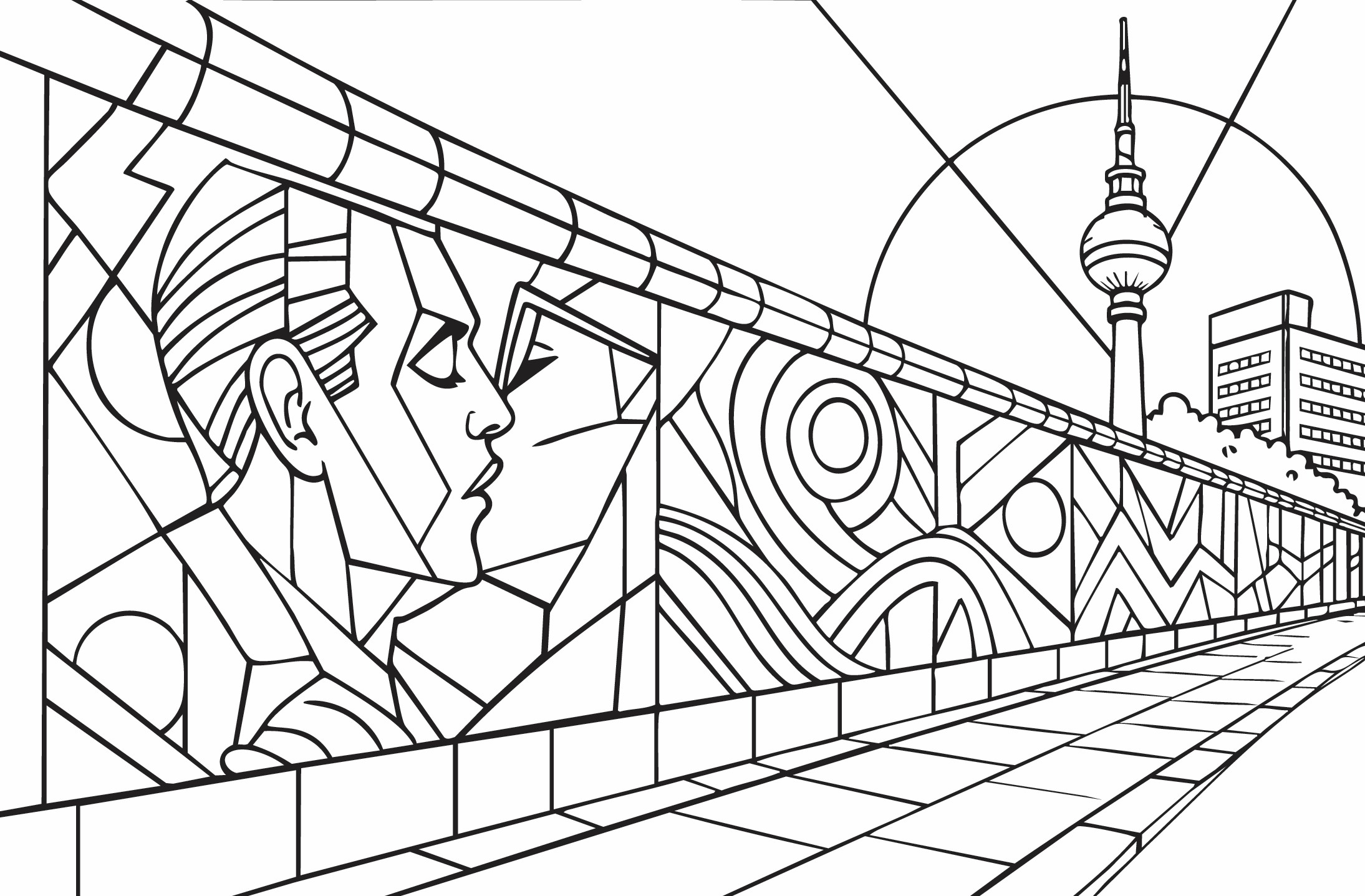
Built in 1961 and later dismantled after 1989, the Berlin Wall is famous as a powerful symbol of division, reunification, and modern European history.
Discover the architecture, neighbourhoods and everyday icons of Berlin through clean Bauhaus-inspired line illustrations, ready for your colours.
From Berlin Wall to Tempelhof Field, this edition explores the sights, local culture and visual character of Berlin through a gallery of line illustrations.
Designed for adults who love travel, architecture and creative downtime, the pages use bold composition and open spaces for mindful colouring.
VIEW THE BERLIN BOOK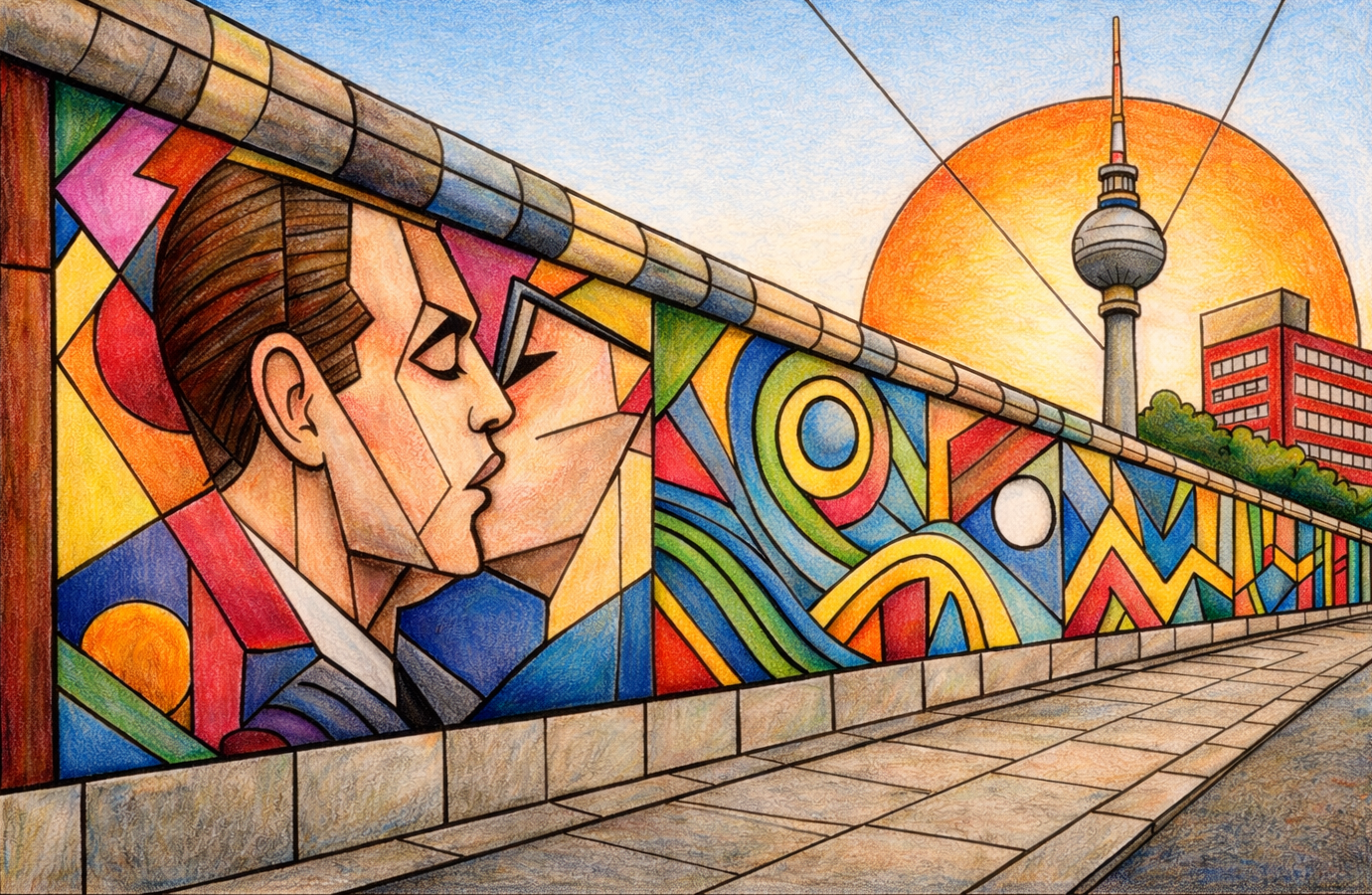
PREVIEW: BERLIN · LINE ART & COLOUR
Discover the places and details that inspired the illustrations in this edition.
Built in 1961 and later dismantled after 1989, the Berlin Wall is famous as a powerful symbol of division, reunification, and modern European history.
Completed in 1791, the Brandenburg Gate is Berlin’s most famous landmark, known for its neoclassical design and historic political significance.
Opened in 1969, the Fernsehturm is famous for being Berlin’s tallest structure and for its panoramic city views.
Introduced in East Germany in the 1960s, the Ampelmann is famous as a beloved pedestrian traffic-light symbol and a nostalgic Berlin icon.
Opened in 2004, Berghain is famous worldwide for its techno music, strict door policy, and industrial club atmosphere.
Developed with Berlin’s subway system from 1902 onward, the U-Bahn entrance is famous as a practical symbol of the city's transport network and its iconic early-20th-century architecture.
Completed in 1896, Oberbaum Bridge is famous for its twin towers, brick Gothic style, and role as a striking link between East and West Berlin.
Added in 1999, the Reichstag Dome is famous for its glass design, public viewing ramp, and symbolic role in German democracy.
Created in 1990 on a remaining stretch of the Berlin Wall, the East Side Gallery is famous for its murals and powerful political art.
Popularized after the 1940s, the currywurst stand is famous as a classic Berlin street-food institution.
Trams have operated in Berlin since the 19th century, and they are famous for being a key part of the city’s everyday public transport.
Long associated with Berlin’s music culture, vinyl records are famous for their warm sound and strong connection to the city’s club and design scenes.
Built especially in the postwar decades, Plattenbau apartments are famous for their prefabricated concrete design and their role in Berlin’s housing history.
Completed in 1873, the Victory Column is famous for its gilded statue, monumental height, and panoramic viewing platform.
Popular throughout the 20th century, the vintage Berlin bicycle is famous for its practical design and its connection to the city’s cycling culture.
Developed from a royal hunting ground into a sprawling public park in the 18th century, Tiergarten is famous as Berlin's leafy green heart, filled with shaded paths and tranquil lakes.
Formerly opened as an airport in 1923 and later turned into a public park, Tempelhof Field is famous for its huge open space and unusual reuse of airport runways.
Explore the Berlin edition and the wider Page Craft Studio city colouring book collection.