Gwanghwamun Gate
Built in 1395, Gwanghwamun is the grand main gate of Gyeongbokgung Palace and one of Seoul’s most recognisable historic landmarks.
Discover the architecture, neighbourhoods and everyday icons of Seoul through clean Bauhaus-inspired line illustrations, ready for your colours.
From Gwanghwamun Gate to Dongdaemun Design Plaza (DDP), this edition explores the sights, local culture and visual character of Seoul through a gallery of line illustrations.
Designed for adults who love travel, architecture and creative downtime, the pages use bold composition and open spaces for mindful colouring.
VIEW THE SEOUL BOOK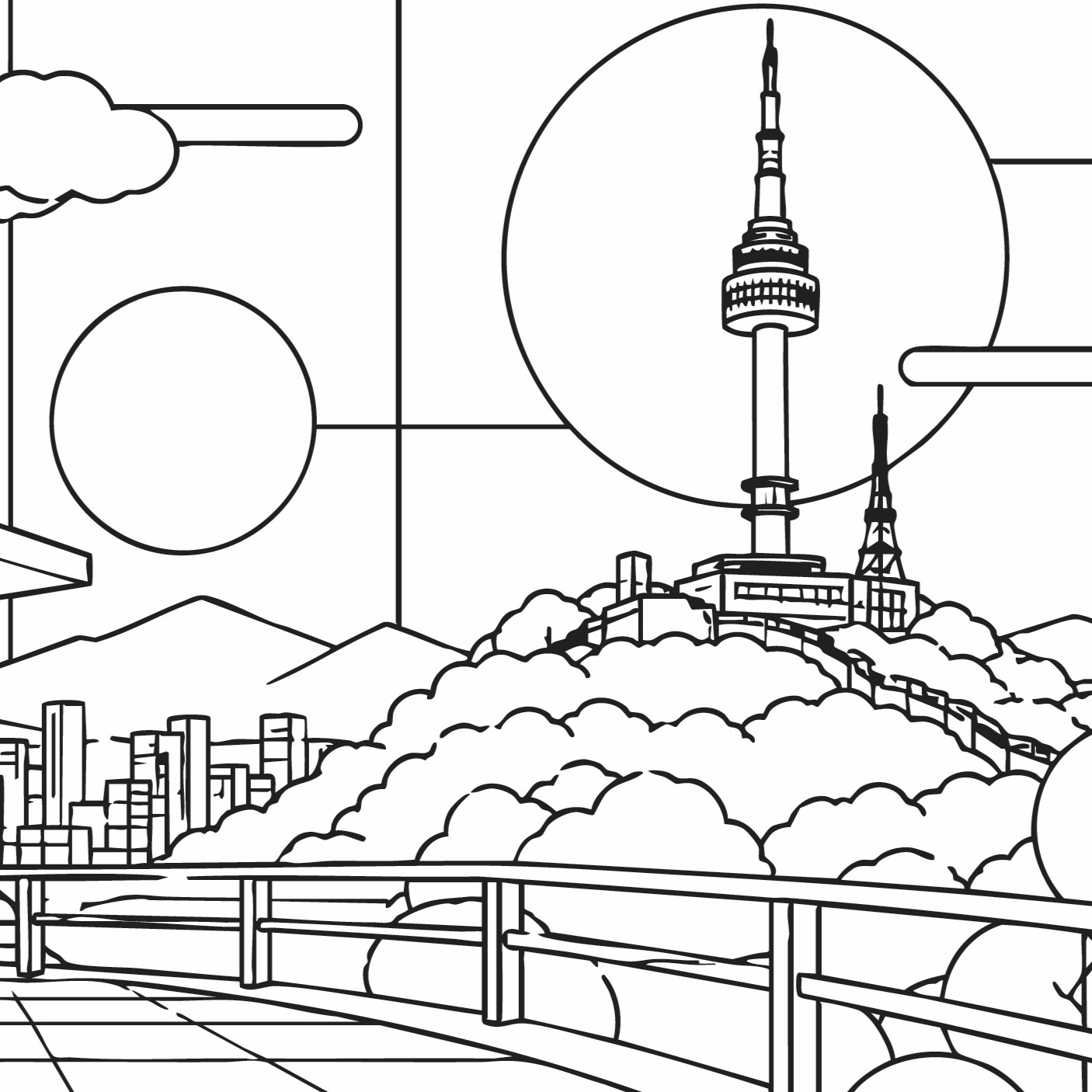
PREVIEW: SEOUL · LINE ART & COLOUR
Discover the places and details that inspired the illustrations in this edition.
Built in 1395, Gwanghwamun is the grand main gate of Gyeongbokgung Palace and one of Seoul’s most recognisable historic landmarks.
Spanning the Han River, Banpo Bridge is famous for its Moonlight Rainbow Fountain, a spectacular display of water, colourful lights and music.
Transformed by a public art project in 2006, Ihwa Mural Village is known for its hillside streets, murals, sculptures and views across Seoul.
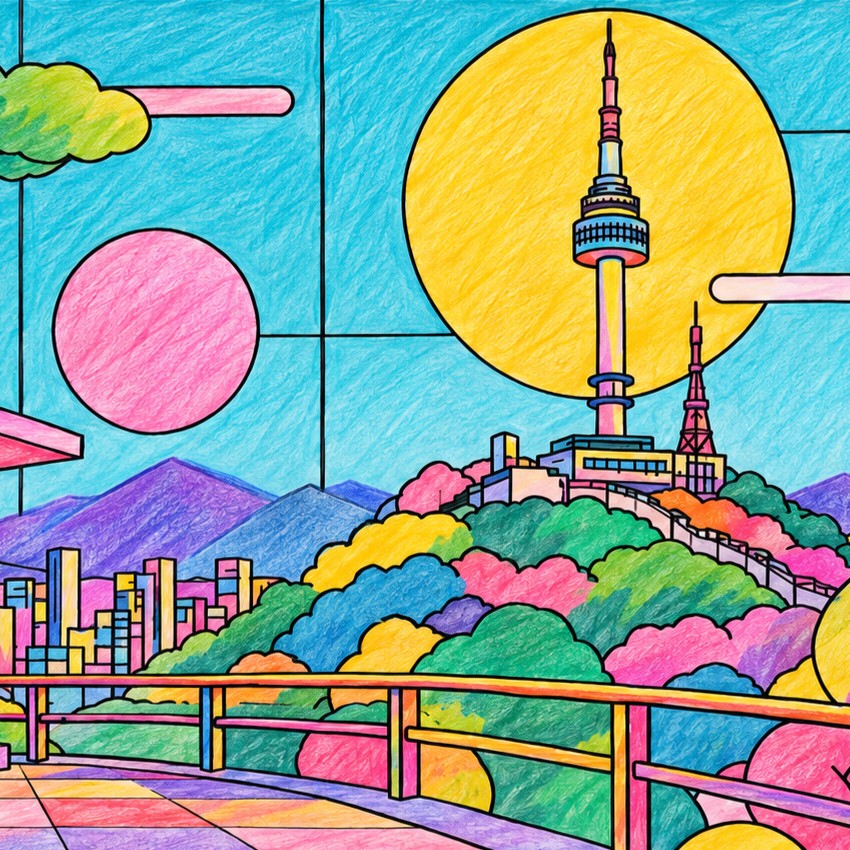
Rising above Namsan Mountain, N Seoul Tower is a distinctive city landmark offering panoramic views across the Seoul skyline.
Standing 555 metres tall, Lotte World Tower is South Korea’s tallest building and a striking feature of Seoul’s modern skyline.
Haechi is Seoul’s mythical guardian creature, traditionally associated with justice, safety and protection, and adopted as a symbol of the city.
Completed in 1398, Sungnyemun was one of the main gates of the historic walled city and is a treasured landmark of Joseon-era Seoul.
Flowing through Seoul, the Han River is framed by parks, bridges and a modern skyline, forming one of the defining landscapes of the city.
Running through central Seoul, Cheonggyecheon is a restored urban stream and public space that provides a peaceful contrast to the surrounding city streets.
Established in 1905, Gwangjang Market was Korea’s first permanent market and is now celebrated for street food, textiles, hanbok and traditional market culture.
A major centre of Korean Buddhism, Jogyesa is the head temple of the Jogye Order and is beautifully decorated with lanterns for celebrations surrounding Buddha’s Birthday.
Bungeoppang is a beloved Korean street snack made from fish-shaped batter, traditionally filled with sweet red bean paste and especially popular in winter.
Developed as a hanok neighbourhood in the 1920s, Ikseon-dong is known today for its narrow lanes, traditional houses, cafés, restaurants and creative shops.
Hangul, Korea’s distinctive writing system, gives Seoul’s street signs, shopfronts and neighbourhoods an instantly recognisable visual character.
Created as part of the royal palace grounds, Changdeokgung’s Secret Garden is celebrated for its pavilions, ponds and landscape designed in harmony with the natural terrain.
Seoul’s extensive subway system connects neighbourhoods across the capital and has become an essential part of everyday life in this fast-moving city.
Opened in 2014 and designed by architect Zaha Hadid, Dongdaemun Design Plaza is renowned for its sweeping curves and futuristic architecture.
Explore the Seoul edition and the wider Page Craft Studio city colouring book collection.